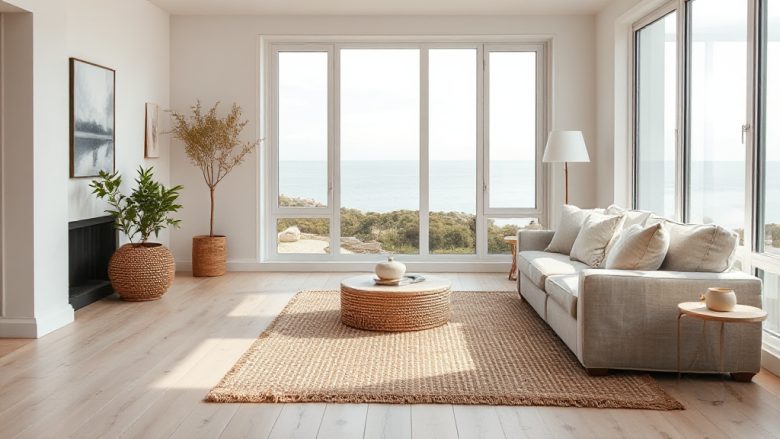
Beach houses age badly when they’re decorated to a single season’s mood. The striped cushions fade, the novelty signs go crooked, and five years later the whole place looks like a photograph of someone else’s holiday. Coastal interiors move slowly for a reason: salt air, strong light and heavy use punish anything flimsy or overly specific. So when I look at the beach house decor trends to watch in 2026, I’m less interested in what photographs well this summer and more interested in what will still feel right when the novelty wears off.
The shifts worth watching this year aren’t loud. They’re about materials that improve with age, colours borrowed from the actual coast rather than a catalogue’s idea of it, and a growing appetite for rooms that feel lived in rather than staged. Below, I’ve separated the looks I think will last from the ones I’d rent for a season and never buy.
1. Limewash, Clay and Chalky Plaster Walls
Flat white emulsion has been the default beach house wall for decades, and it’s starting to look tired. The trend replacing it is mineral finishes: limewash, clay paint and chalky plaster that leave a soft, cloudy surface instead of a hard plastic sheen. In a bright coastal room, that matters. Flat white bounces light back at you and can feel clinical. A limewashed wall absorbs a little of it, so the room reads warmer without any colour being added.
Why now? Partly because the heritage and natural-building worlds have pushed these products into the mainstream, and partly because people have grown suspicious of the wipe-clean perfection that dominated interiors for the past decade. Limewash also suits older coastal properties, where walls are never quite straight and a bit of tonal movement hides a multitude of sins.
Durability verdict: lasting. This is a materials shift, not a colour trend, and materials shifts tend to stick. It also ages honestly — a little patina near doorways looks intentional rather than shabby. The one caveat is maintenance: limewash can be fussy in very wet rooms, so keep it for bedrooms, hallways and living spaces rather than shower cubicles.
2. Driftwood Tones Replacing Grey Washes
Grey-washed timber has had a long run in coastal interiors, and it’s now the thing most likely to date a room. The 2026 alternative is warmer and less uniform: pale sand, oat and driftwood tones, often with visible grain and a matte finish. Think floors, ceiling beams, kitchen cabinets and simple furniture in light timber that looks sun-bleached rather than painted over.
The reason is straightforward. Grey-washed wood was designed to look weathered, but it does so in a flat, factory way. Natural pale timber actually weathers, and it picks up the ambient light of a room rather than fighting it. In a house near the sea, where light shifts from cold blue in winter to honey in late summer, a neutral warm base handles both far better.
Durability verdict: lasting, with a warning. Warm timber is a genuine correction, not a fad, and it will look current for years. The warning is about cheap imitations — thin veneers and heavy orange stains will age badly. If you’re buying, look for solid or thick-veneer pieces you can sand back later.
3. Quiet Colour: Sea Fog, Kelp and Wet Sand
The nautical palette of navy, white and red is finally loosening its grip. What’s replacing it is a subtler set of coastal colours drawn from the actual shoreline on an overcast day: sea fog grey, muted kelp green, wet sand beige and a soft, dusty blue that sits somewhere between the two. These are colours that look almost neutral until you put them next to something truly neutral, at which point they reveal a quiet tint.
This is happening because the all-white coastal look has been done to death, and because people are decorating for year-round use rather than a two-week summer let. A room in sea fog and oat feels calm in February as well as July. Strong navy and bright white only really work in blazing sunshine; the moment the sky turns, they can feel cold and slightly themed.
Durability verdict: lasting. Muted, desaturated palettes have been building for several years and they align with how people actually use coastal homes now — as places to work from, not just to holiday in. If you want one bolder accent, keep it small and moveable: a lamp, a throw, a piece of art. Don’t commit a whole wall to it.
4. Textured Natural Fibres and the Return of Real Materials
Rattan and jute never really left, but 2026 is the year the quality conversation catches up with the look. Instead of mass-produced woven furniture that sags within two summers, the trend is toward heavier, better-made pieces: thick seagrass, hand-woven wool rugs, linen with real weight, and stone or unglazed ceramic surfaces in kitchens and bathrooms.
There’s a practical driver here. Coastal homes are hard on furnishings. Salt, sand, damp and sun destroy anything thin or synthetic quickly, and people have noticed that cheap woven furniture simply doesn’t survive. Real materials cost more upfront but often last a decade or more, and they look better as they wear. A wool rug that’s been walked on for five years has more character than a new one; a polyester lookalike just looks flat.
This is also where the trend intersects with sustainability, though I’d be cautious about that framing. The honest reason to buy natural fibres is durability, not virtue. If a material can’t handle the coast, it isn’t green no matter what the label says.
Durability verdict: lasting. The shift away from synthetic coastal decor is one of the more solid changes of the past few years. Buy fewer, heavier pieces and you’ll still be using them in 2036.
5. Layered Lighting and the End of the Big Ceiling Fixture
The single statement pendant is fading in coastal interiors, replaced by layers: wall lights, floor lamps, small table lamps and low-level ambient light. In a beach house this makes obvious sense. Evenings are long, rooms are often open-plan, and one overhead light flattens everything into a bright, unflattering glare.
The new approach uses several soft sources at different heights, often with warm bulbs and simple shades in linen, paper or ceramic. It’s less about a visible fixture and more about the quality of light in the room. It also happens to suit the way coastal homes are used — reading in a corner, eating late, sitting up after everyone else has gone to bed.
Durability verdict: lasting, and overdue. Layered lighting is a functional improvement rather than a decorative whim, and it’s hard to see it reversing. The main risk is over-collecting lamps. Two or three well-placed sources per room is plenty.
What I’d Skip
Not everything on the horizon deserves your money. A few looks are being pushed hard right now and I don’t think they’ll survive contact with a real coastal home.
First, hyper-themed rooms — a whole bedroom styled as a boat cabin, or a bathroom covered in novelty maritime tiles. They photograph brilliantly and tire within a year. Second, oversized arched mirrors and curved plaster features that have spread from city interiors into coastal ones; they look borrowed rather than belonging. Third, anything in that very pale, very cool grey-white combination that reads as “hotel” rather than “home”. And fourth, mass-produced woven furniture with thin frames and synthetic bindings. It’s the single fastest way to make a beach house look cheap.
If you’re planning changes for 2026, the safest strategy is to spend on the shell — walls, floors, lighting, one good rug — and keep the seasonal flourishes small and replaceable. That way the house can absorb a trend or two without ever being defined by one.
Frequently Asked Questions
What colours are in style for beach houses in 2026?
Muted, natural tones are leading: sea fog grey, soft kelp green, wet sand beige and dusty blue, usually paired with warm off-whites and pale timber. Strong navy-and-white schemes are declining because they only work in bright summer light.
Are grey-washed floors and furniture going out of style?
Yes, they’re fading. The flat, uniform grey wash is being replaced by warmer pale timber with visible grain. If you already have grey-washed floors, they’re not a disaster — but new purchases should lean warmer and more natural.
How do I decorate a beach house so it doesn’t look dated in five years?
Invest in the fixed elements — walls, flooring, lighting and one durable rug — and keep trend-led items small and replaceable. Choose real materials over synthetic ones, and avoid heavily themed decor that locks a room into a single idea.
Is rattan still on trend for coastal interiors?
Rattan and woven fibres are still very much in use, but the emphasis has shifted to quality. Heavier seagrass, well-made rattan and natural fibres that can handle salt and damp are replacing thin, mass-produced versions that sag within a season or two.