My first proper season of wildflower spotting started in a damp April meadow and ended with muddy boots, a sore neck and a camera roll full of blurry yellow things I still can’t confidently name. It was genuinely rewarding and mildly frustrating in roughly equal measure. That mix is exactly why wildflower spotting pros and cons explained is worth doing properly, rather than pretending the hobby is either a free joy or a pointless slog. This post weighs both sides honestly, including the awkward parts about access, timing, identification and the impact we have on the places we visit.
What wildflower spotting actually involves
Wildflower spotting is the habit of going out to find, watch and often photograph wild plants growing in their own places: verges, hedgerows, chalk downland, woodland rides, saltmarsh edges, old churchyards and the scruffy corners of parks that nobody mows. It isn’t gardening and it isn’t foraging, though both overlap at the edges. You’re a visitor. The plant is doing its own thing, on its own schedule, in a spot it chose without asking you.
That last point shapes everything. A garden centre stocks what you want when you want it. A wildflower meadow gives you a two-week window, sometimes less, and if you miss it you wait a year. The pros and cons both grow out of that single fact.
The genuine pros of wildflower spotting
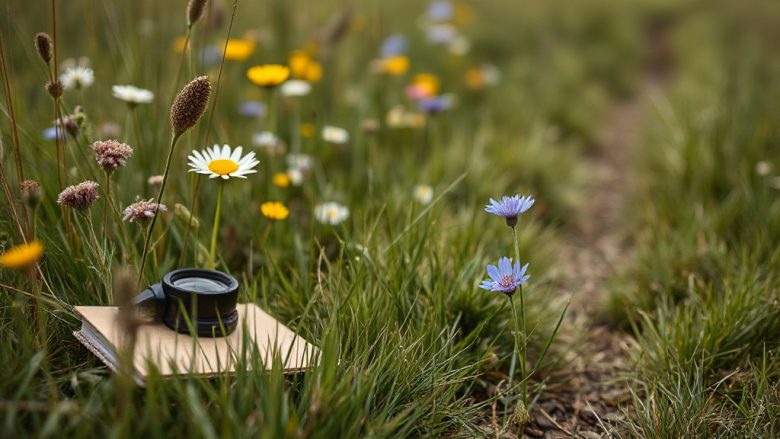
The obvious benefit is cost. A walk is free, and the plants are free. You don’t need a membership, a licence or a season ticket. A decent hand lens costs less than a takeaway, and a phone camera will get you further than you’d expect. Compare that with most hobbies and it’s almost embarrassingly cheap.
Then there’s the attention training. Wildflower spotting forces you to slow down and look at ground level. After a few weeks you start noticing things you’d walked past for years: the difference between cow parsley and rough chervil, the way a bank of cowslips sits lower than a bank of primroses, the specific shade of blue that means a speedwell rather than a forget-me-not. That shift in perception is the real reward, and it doesn’t fade.
It’s also quietly good for you. You’re outside, often in unglamorous weather, moving slowly and looking closely. It suits people who find birdwatching too fast and gyms too loud. And because wildflowers are seasonal, the hobby has a natural rhythm. Late spring is frantic, high summer is lush, autumn is seed heads and guesswork, winter is planning and a bit of twitching at evergreen leaves.
There’s a social side too, though it’s gentler than most. Local recording groups, county flora projects and botanical societies exist almost everywhere, and they tend to be welcoming to beginners who admit they don’t know much. Sharing a confusing plant with someone who does know is one of the fastest ways to learn.
The real cons, and why they matter
Timing is the biggest frustration. Wildflower spotting is a hobby of narrow windows. Bluebells last a fortnight. Some orchids flower for ten days. If your free weekend lands wrong, you’ve missed it, and no amount of enthusiasm brings it back. This makes the hobby hard to plan around work, family or weather, and it means beginners often start in the wrong month and conclude there’s nothing to see.
Identification is genuinely hard, and I’d rather say that plainly than pretend otherwise. Many species look near-identical without a hand lens and a key. Yellow dandelion-like flowers alone can send you down a rabbit hole of hawkweeds, hawk’s-beards and cat’s-ears. Grasses and sedges are worse. You will misidentify things, confidently, and find out months later. That’s normal, but it’s a real barrier for anyone who likes clean answers.
Access is uneven. The best sites are often protected, privately managed or reached by a single muddy footpath with nowhere to park. Some reserves ask you to stay on paths precisely because the plants are fragile. That’s reasonable, but it means the richest spots are sometimes the least welcoming, and the hobby can quietly become a car-dependent one.
And then there’s the impact question, which is where honesty matters most. Wildflower spotting done carelessly damages the thing you came to see. Trampling compacts soil and crushes seedlings. Picking flowers removes seed for next year. Photographers lying flat in a meadow for a low angle can flatten more than they realise. Dogs off leads in flowering grassland do the same. None of this is malicious, but it adds up, especially at popular sites.
There’s also a subtler cost: the hobby can tip into collecting. Not physical specimens, but lists, ticks and photographs. That’s fine as a game, but it can turn a slow, attentive walk into a rushed mission to add one more species before the light goes.
How to keep the cons manageable
Most of the downsides shrink with a few habits. Learn a handful of common species really well before chasing rarities. Ten confident identifications beat a hundred vague ones, and they give you a baseline to compare everything else against.
Go small and local. A single verge you walk past weekly will teach you more than a long drive to a famous reserve, and it saves fuel, time and stress. Visit the same patch through the season and watch it change. That’s where the real learning happens.
Stay on paths where paths exist, and where they don’t, step carefully and avoid the densest flowering. Keep dogs on leads in grassland between spring and late summer. Don’t pick. Photograph instead, and if you want a closer look, use a lens or kneel rather than trample. If a site has rules, follow them even when they seem fussy. They usually exist because someone learned the hard way.
Finally, accept uncertainty. Carry a notebook, take several photos including leaves and stems, and record the date and place. Then let the identification wait. Coming back to a puzzle a week later, with better notes, is far more satisfying than forcing a wrong name in the moment.
Who wildflower spotting actually suits
If you like slow, quiet, detail-heavy hobbies and you’re comfortable being wrong a lot, wildflower spotting will reward you for years. It suits walkers, gardeners, photographers, and anyone who wants a reason to look down instead of ahead. It suits people who can be flexible about when they go out, or who are happy to enjoy whatever happens to be flowering that week rather than chasing a specific plant.
It suits you less well if you need predictable results, hate mud, or want a hobby that fits neatly into a fixed schedule. It also won’t suit anyone unwilling to accept that the best sites have rules and that following them is part of the deal. That’s the honest verdict. Wildflower spotting gives back far more than it costs, but only if you go in knowing the windows are short, the names are hard and the ground under your boots is not just scenery. Treat it well and it keeps giving. Treat it carelessly and you’re just another pair of boots in a meadow that can’t afford them.